

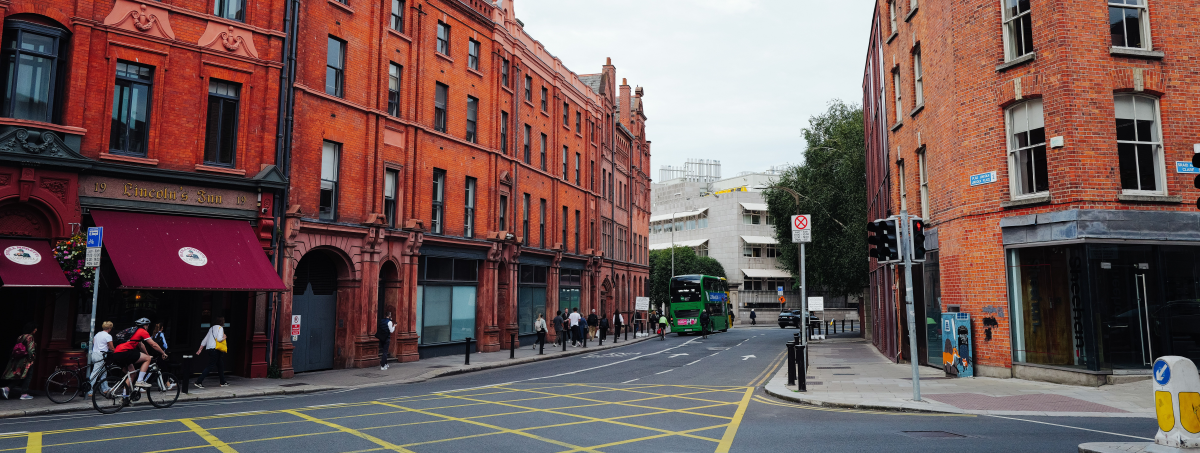
Dublin’s expansion of zebra crossings demonstrates how targeted road infrastructure can form part of a preventative approach to pedestrian safety in busy urban environments.
Dublin City Council has begun work on 10 new zebra crossings across the city, with a further 10 planned by the end of 2026. The rollout follows changes to crossing regulations and assessments of traffic volumes and vehicle speeds at potential locations.
For health and safety professionals, the programme is relevant because pedestrian protection is closely linked to the design and management of shared public environments. The new crossings reported by The Journal will give pedestrians priority at designated locations while using signage rather than the traditional flashing amber beacons.
The revised approach also reflects changes to Ireland's road-safety framework. Under the current rules, drivers must yield to pedestrians who are waiting to cross or have already started crossing at a zebra crossing, as confirmed by the Road Safety Authority's pedestrian guidance. This provides a clearer safety expectation for both drivers and pedestrians using the infrastructure.
The locations selected for the latest rollout have been assessed according to traffic volumes and vehicle speeds, with five of the 25 locations previously considered by the council subsequently removed following safety assessments. This demonstrates the value of using site-specific risk considerations rather than applying a uniform infrastructure solution across different environments.
The programme also has particular relevance around schools and other areas where pedestrian activity is high. One of the selected locations is Crawford Avenue, where local schoolchildren had previously raised the need for a safer crossing. The RSA's guidance on getting children to school safely also highlights the importance of designated crossings and keeping areas around pedestrian crossing points clear.
The decision to use signage-only crossings can also allow Dublin City Council to expand pedestrian-priority infrastructure without the same beacon requirements associated with traditional installations. The Journal reports that the revised design is intended to reduce installation costs, potentially allowing limited infrastructure budgets to support a greater number of locations.
From a health and safety perspective, however, cost efficiency is secondary to appropriate site selection and design. The removal of five proposed locations following safety assessments indicates that lower-cost infrastructure is not being treated as a substitute for assessing whether a particular location is suitable.
The rollout therefore illustrates a broader preventative principle for public environments: safety can be improved by identifying locations where pedestrian and vehicle movements create potential risks, assessing those risks and introducing appropriate controls before an incident occurs.
For the sector, Dublin's zebra crossing programme highlights how relatively straightforward infrastructure interventions can support wider pedestrian safety strategies when they are based on site-specific risk assessment and clear operating rules. For health and safety professionals, the approach reinforces the importance of designing public spaces around predictable interactions between people and vehicles rather than relying solely on individual behaviour.
Source: The Journal / Road Safety Authority / Dublin City Council












.png)
