

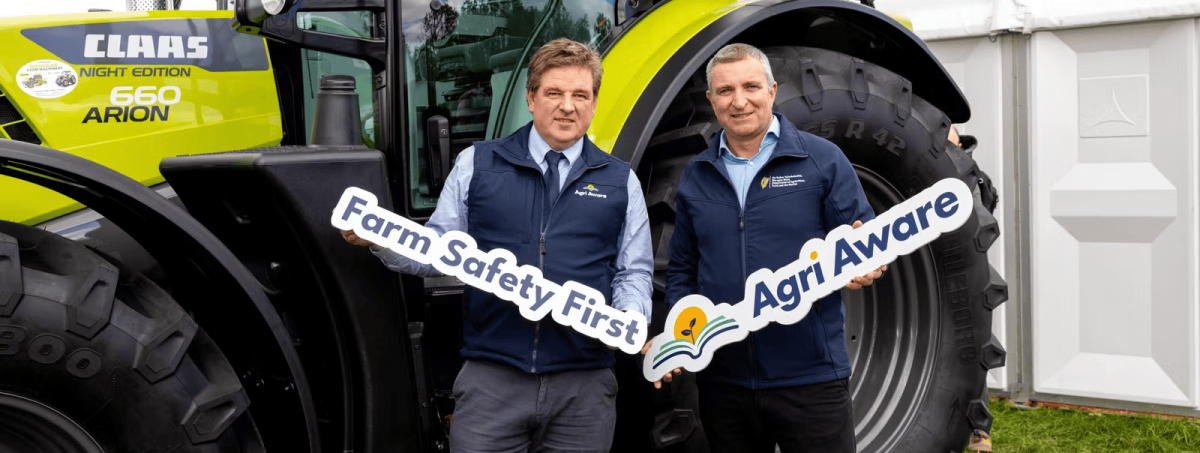
Agri Aware has been selected to deliver the Farm Safety First Programme in second-level schools across Ireland, giving young people practical guidance on recognising hazards and developing safer habits before they take on greater responsibilities on farms. Agriland reported the announcement on 2 October.
The programme has been awarded following a competitive process and is funded by the Department of Agriculture, Food and the Marine (DAFM), with an option to extend the contract annually through 2031. The initiative reflects a continued government focus on preventing farm incidents through education and early intervention.
Agri Aware is an Irish agricultural education organisation that works with schools and communities to improve understanding of farming and the wider agri-food sector. Its Farm Safety First programme was originally introduced for Transition Year students in 2024, covering personal safety, hazard identification, livestock and machinery and vehicle safety. Agri Aware says the programme is designed to help students understand their responsibilities when visiting or working on farms.
The Health & Safety value of the initiative lies in developing awareness before unsafe practices become established. Young people can encounter farms both as workplaces and family environments, making familiarity with machinery, vehicles, livestock and other hazards particularly important. DAFM said eight people under 18 lost their lives on Irish farms over the past decade, with all eight incidents involving farm vehicles. The Department’s farm-safety guidance identifies vehicles and machinery among the principal risks facing children and young people on farms.
The programme combines classroom resources with practical learning, including workshops and farm visits. This gives students an opportunity to move beyond theoretical safety messages and consider how safe working practices apply in real agricultural environments. For teachers, it also provides structured material that can support farm-safety education within the school setting.
The approach is particularly relevant as students become more involved in agricultural work. Building competence and awareness at an early stage can help establish habits around machinery use, livestock handling, hazard recognition and responsible decision-making that can carry into future employment and farming careers.
For the sector, the initiative shows how preventative Health & Safety education can contribute to long-term behavioural change. By reaching young people before they enter full-time agricultural employment, Farm Safety First gives schools, government and the farming community a practical way to build stronger safety awareness and support the next generation of workers and farmers.
Source: Agriland / Department of Agriculture, Food and the Marine / Agri Aware












.png)
