

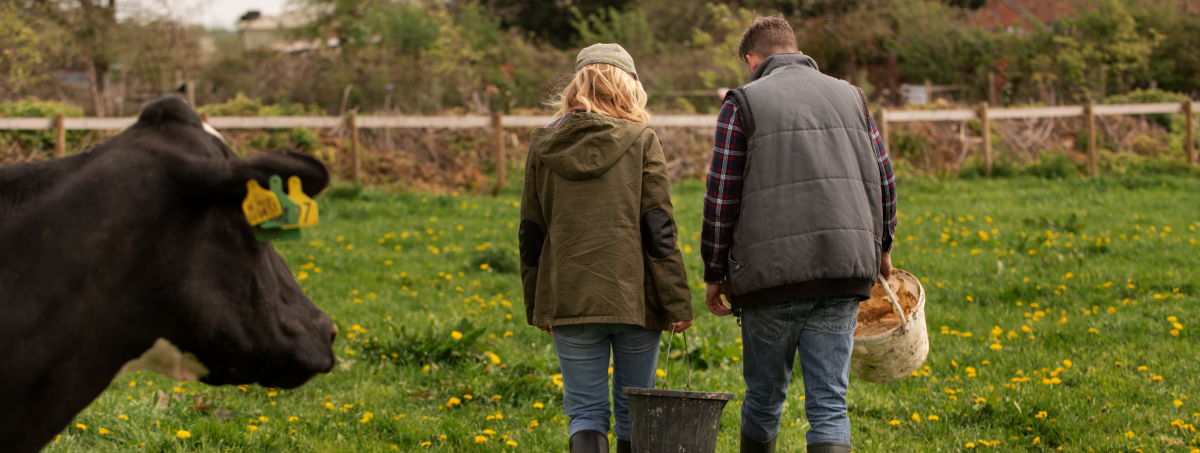
A new national initiative is placing greater emphasis on health, safety and wellbeing across social farming, farm open days and events, with practical training designed to help farmers identify and manage risks.
The Limerick Leader reported that the Health and Safety for Social Farming, Farm Open Days and Events project was launched in Crecora by Minister of State Niall Collins. Led by Leitrim Development Company, West Limerick Resources and the Social Farming Ireland Network, the initiative is supported by the Department of Agriculture, Food and the Marine and is intended to address safety risks affecting farmers, participants, visitors and farm families.
The programme reflects a wider need to strengthen risk awareness across working farms, particularly where agricultural premises are also used for social farming placements, public open days, training and community events. The Department of Agriculture, Food and the Marine's farm safety guidance identifies risk reduction and improved safety practices as important priorities for protecting farmers, workers, families and visitors.
For farms operating as social or community environments, the risk profile can extend beyond conventional agricultural activities. Visitors may have limited mobility, disabilities, different language capabilities or limited familiarity with farm machinery, livestock and other hazards. The new initiative will provide training covering farm health and safety risks, practical risk-mitigation measures and hazards associated with farm open days and events. The Social Farming Ireland programme includes 10 online health and safety training sessions and six on-farm training sessions running between July and September 2026.
The practical emphasis is significant for health and safety professionals. Rather than treating farm safety solely as a compliance exercise, the programme aims to encourage farmers to identify hazards and introduce appropriate controls before activities take place. Training will be facilitated by Jim Dockery of Towra Livestock Services, with a steering committee including a Health and Safety Authority representative, farmers, a disability advocate, a mental health advocate and a social farming participant.
The initiative also recognises that effective safety management must account for the people using a farm as well as the physical environment. Social Farming Ireland supports placements and activities that bring people into working farm environments, making appropriate planning and risk management particularly important when farms host participants, visitors and organised events.
For the sector, the lesson is clear: farm safety increasingly requires a broader approach that considers behaviour, accessibility, visitor management and the interaction between agricultural work and community activity. As more farms support social farming and public engagement, practical risk assessment and proactive safety planning will be essential to keeping working and visiting environments safe.
Source: Limerick Leader / Social Farming Ireland / Department of Agriculture, Food and the Marine





.png)
