

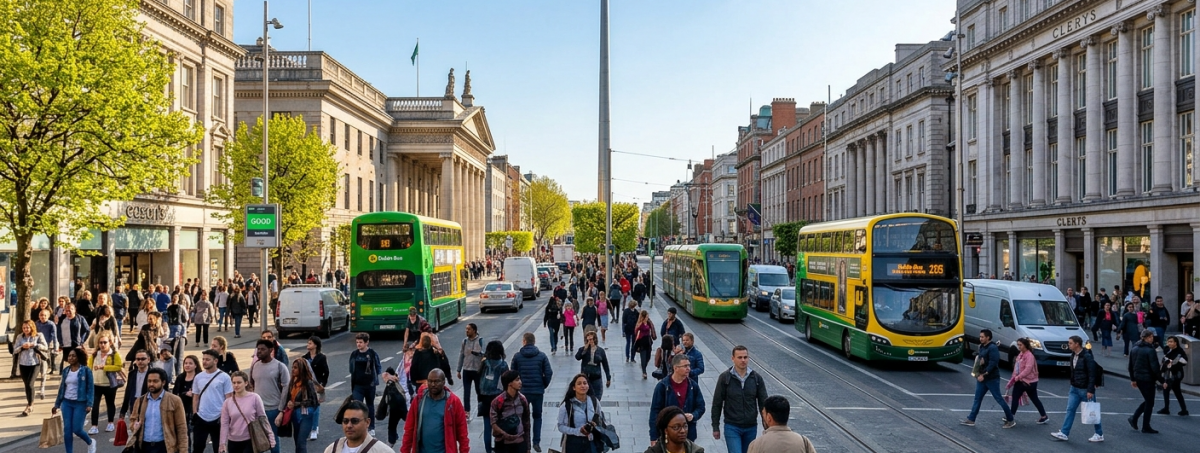
Ireland’s air quality is improving, creating an opportunity for employers, facilities managers and local authorities to build on that progress and reduce health risks linked to pollution. The Environmental Protection Agency’s (EPA) Air Quality in Ireland 2025 report confirms that Ireland met existing EU air quality limits last year, while warning that further action is needed to protect health and meet stricter standards due in 2030.
Published on 22 October, the report draws on data from 113 monitoring stations and shows that most pollutant levels have declined over the past two decades. However, as EP Magazine reports, compliance with current legal limits does not eliminate the health risks associated with exposure. The EPA cites European Environment Agency estimates linking fine particulate pollution to approximately 1,500 premature deaths in Ireland each year.
For health and safety professionals, the findings reinforce the importance of prevention beyond the traditional workplace. Air pollution from solid-fuel heating and road traffic can affect people in cities, towns and rural communities. Fine particulate matter can penetrate deep into the lungs and enter the bloodstream, making cleaner air an important consideration in wider efforts to protect public health.
The EPA’s official report identifies practical measures that can help sustain progress, including enforcing restrictions on smoky fuels, supporting home energy retrofits, improving public transport and encouraging active travel. These actions offer opportunities for organisations to consider how building upgrades, heating choices and employee travel arrangements can contribute to healthier environments.
The case for continued improvement is reinforced by RTÉ’s coverage of the report, which highlights the gap between current compliance and future requirements. The revised European standards will demand further reductions in pollution, making sustained investment and coordinated local action important over the coming years.
Facilities and workplace teams can contribute by reviewing heating and ventilation arrangements where relevant, considering air quality in building and refurbishment decisions, and using available local air quality information to inform practical health advice. While outdoor pollution cannot be solved by individual employers alone, thoughtful building management and support for cleaner travel can form part of a broader prevention strategy.
For the sector, the lesson is direct: Ireland’s air quality gains provide a strong foundation, but protecting health requires continued action. By combining cleaner buildings, responsible heating choices and smarter transport planning, organisations can support healthier communities while helping the country prepare for the more demanding standards ahead.
Source: EP Magazine / Environmental Protection Agency / RTÉ






.png)
