

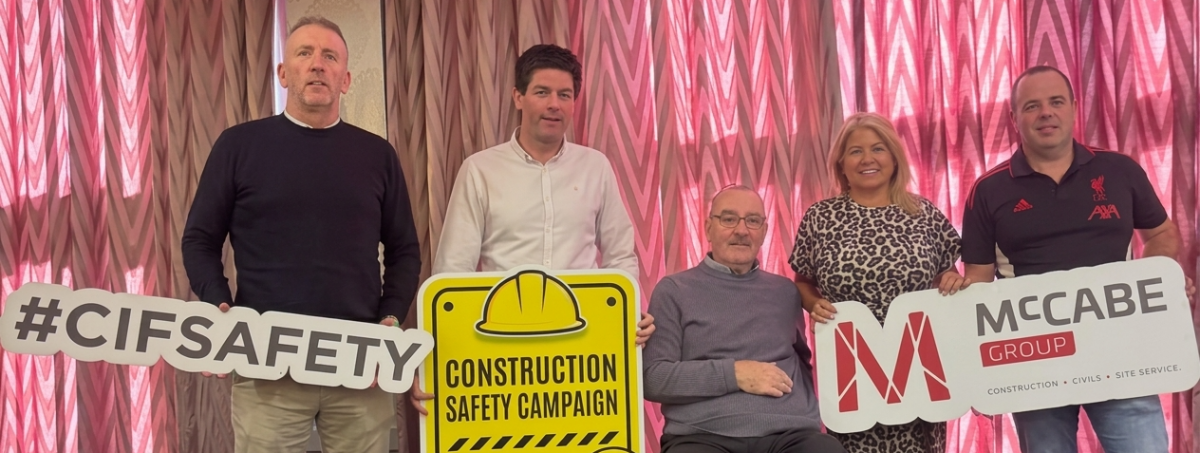
A personal story of survival is helping reinforce a critical message for Ireland’s construction industry: consistent safety practices, effective planning and strong site leadership can make a lasting difference to workers’ lives.
James Gorry, from Portarlington, County Laois, features in the Construction Industry Federation’s (CIF) 2026 Construction Safety Campaign. After falling 26 feet while working on a construction site in 2005, Gorry sustained life-changing injuries that left him unable to use his legs. He now uses his experience as a motivational speaker to advocate for workplace safety, mental health and accident prevention, as reported by Ireland Live News.
The campaign, themed Back to Basics, ran from 12 to 23 October, reinforcing the need to make fundamental safety measures part of everyday site operations. The CIF’s official campaign guidance encourages construction businesses to review their safety management systems, engage directly with workers and strengthen practices around critical risks, leadership and health and wellbeing.
For contractors, site managers and health and safety professionals, the message is practical. Risk assessments must reflect the work being undertaken, supervisors need to ensure safe systems are followed, and workers must have the appropriate training, equipment and protective measures before tasks begin. Work at height requires particular attention, including prioritising measures that prevent falls wherever reasonably practicable.
The need for sustained vigilance is underlined by figures published by the CIF at the campaign’s launch. Eight construction-related fatalities had been recorded in Ireland during 2026 at that point, representing 40% of all recorded work-related deaths. This compared with 11 construction fatalities across the whole of 2025 and five in 2024. These are time-specific figures, rather than final totals for 2026. The Health and Safety Authority’s review of construction fatalities also highlights the importance of prevention on smaller sites, where appropriate controls and supervision remain essential.
The campaign provides an opportunity for businesses to turn safety commitments into practical action. Toolbox talks, regular site inspections, clear communication and worker involvement can help teams identify hazards before work proceeds. Reviewing near misses and encouraging employees to raise concerns can further strengthen accountability across projects of every size.
For the sector, the lesson is direct: safer construction sites are built through everyday decisions, not occasional campaigns. By embedding risk assessment, effective supervision and worker engagement into routine operations, businesses can protect their teams, strengthen safety culture and help ensure everyone returns home safely.
Source: Ireland Live News / Construction Industry Federation / Health and Safety Authority








.png)
