

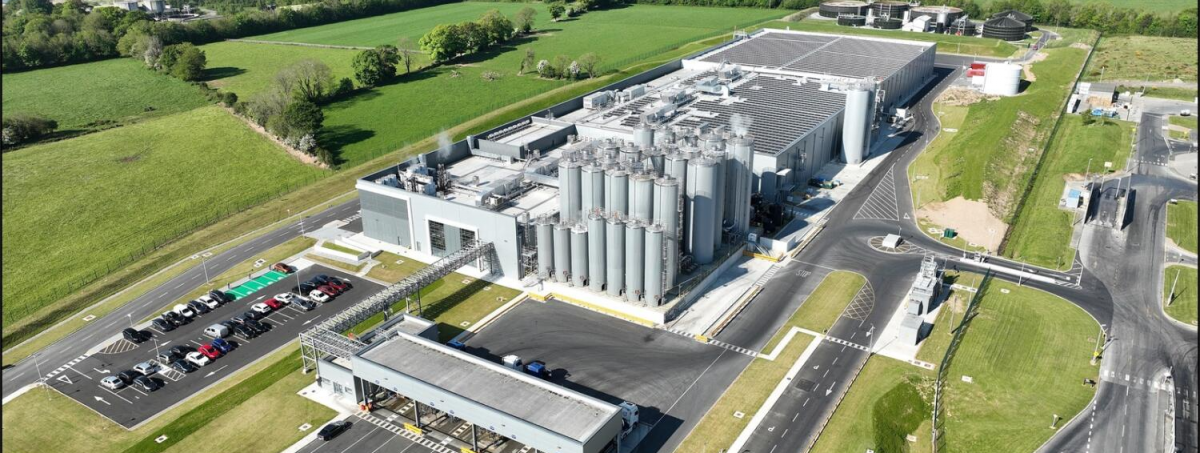
Kilkenny Cheese’s approach to workplace safety has received national recognition, with the Belview-based manufacturer winning the Best New Entry, Medium Size Organisation Award at the 2026 National Irish Safety Organisation (NISO) Awards. The recognition highlights the company’s efforts to embed safety into daily operations as it develops its manufacturing systems and increases production.
The award is listed in the official 2026 NISO results, which confirm Kilkenny Cheese Limited as the category winner. For the company, the achievement also provided an opportunity to benchmark its health and safety arrangements and identify areas for further improvement.
Kilkenny Cheese is a joint venture between Irish dairy co-operative Tirlán and Dutch family-owned dairy business Royal A-ware. The company’s background information describes the partnership behind its continental cheese facility, which produces Gouda and Edam for international markets. The operation is a significant part of the wider dairy supply chain, with Tirlán reporting more than 50,000 tonnes of cheese production in 2025 in its annual report.
Health and safety officer Colin Stevens told the Business Post that entering the awards was intended to provide an independent assessment before the company pursues ISO 45001 health and safety certification. He said: “The reason for entering the awards was to find a benchmark and see where we are before going for the ISO 45001 health and safety certification.”
That focus on continuous improvement is supported by visible management involvement. Stevens said every meeting begins with safety, helping reinforce consistent expectations across the organisation. This is particularly important in a facility operating around the clock, where production, maintenance and cleaning activities must be coordinated across multiple teams and shifts.
The Business Post interview also details the practical controls used to manage the plant’s risks. These include chemical neutralising solutions for cleaning operations, safety observation cards through which employees, visitors and contractors can report concerns, and a safety committee representing all five production teams. Incident and near-miss investigations, root-cause analysis and weekly action reviews provide further structure for identifying hazards and following corrective measures through to completion.
The risks are characteristic of intensive food manufacturing: frequent cleaning can create slip hazards, chemicals require controlled handling, and forklifts, reach trucks, pallet trucks and milk tankers operate across the site. Giving workers clear reporting routes and involving representatives from every production team helps make safety a shared operational responsibility.
For the sector, the lesson is direct: strong manufacturing safety cultures depend on visible leadership, employee participation and controls that work in practice. Kilkenny Cheese’s NISO recognition provides a useful example of how a growing food business can make health and safety part of everyday production management.
Source: Business Post, Kilkenny Cheese builds a safety-first culture




.png)
