

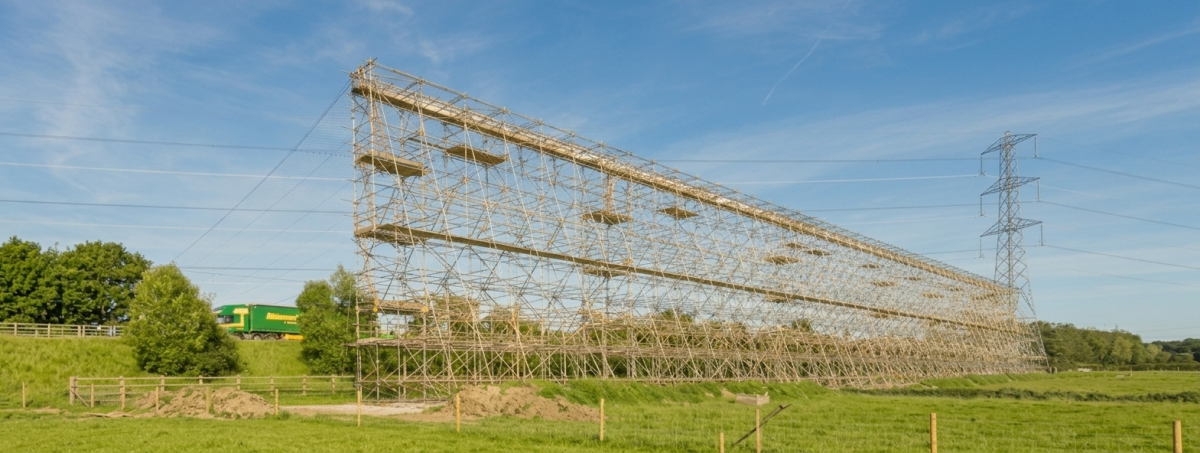
Safety can be built into infrastructure projects long before work begins, and NIE Networks’ proposed £4.8 million scaffolding framework offers a practical example of how procurement can support that objective. Reported by ScaffMag, the framework covers scaffolding for electricity distribution lines, substations and transmission infrastructure across Northern Ireland. The official tender notice sets out two lots, each with an estimated value of £2.4 million, and an initial four-year term with options to extend. The £4.8 million figure is an estimated framework value, not guaranteed spending or confirmation that a contract has been awarded.
The opportunity for health and safety professionals lies in the requirements being built into the proposed service. The tender calls for competent personnel, pre-site assessments, scaffold designs, engineering calculations and task-specific risk assessments and method statements. It also specifies inspections after erection and before first use, at intervals of no more than seven days, and following alterations, adverse weather, impacts or other circumstances that could affect safety. These measures create a structured basis for planning and monitoring work at height, rather than relying on checks only after work is under way. The Health and Safety Executive’s guidance on assessing work at height similarly emphasises risk assessment, planning, training and precautions to prevent or minimise falls.
The wider safety case is reinforced by construction industry statistics. The HSE’s Construction Statistics in Great Britain 2025 recorded 35 fatal injuries to construction workers in 2024/25. Across the five-year period from 2020/21 to 2024/25, falls from height accounted for 53% of construction worker fatal injuries. These figures relate to Great Britain, rather than Northern Ireland specifically, but underline why robust controls around scaffolding and work at height remain a significant industry priority. For organisations procuring specialist services, clear requirements for competence, inspection and documentation can help make safety expectations explicit before contractors begin work.
The framework also illustrates how procurement can connect worker protection with operational continuity. Scaffolding supports maintenance, replacement and repair work on essential electricity infrastructure, including emergency response activities. Having defined expectations for planning, erection, inspection and dismantling can help align contractors and network teams around safe working practices while enabling critical work to proceed. The notice weights price at 70% and quality at 30%, making quality an explicit part of the assessment alongside cost. For facilities and infrastructure managers, the broader lesson is that a well-defined scope and clear quality requirements can help make safety part of service delivery, rather than a separate consideration.
As infrastructure owners plan long-term maintenance and renewal, the opportunity is to treat safety as a core measure of procurement quality. NIE Networks’ proposed framework sets out requirements spanning the full scaffolding process, from initial assessment to inspection and dismantling. For contractors, procurement teams and health and safety leaders, that approach reinforces the value of competent people, documented controls and consistent oversight. Embedding these expectations at a tender stage can help establish a stronger foundation for protecting workers and maintaining the infrastructure communities and businesses rely on.









.png)
