

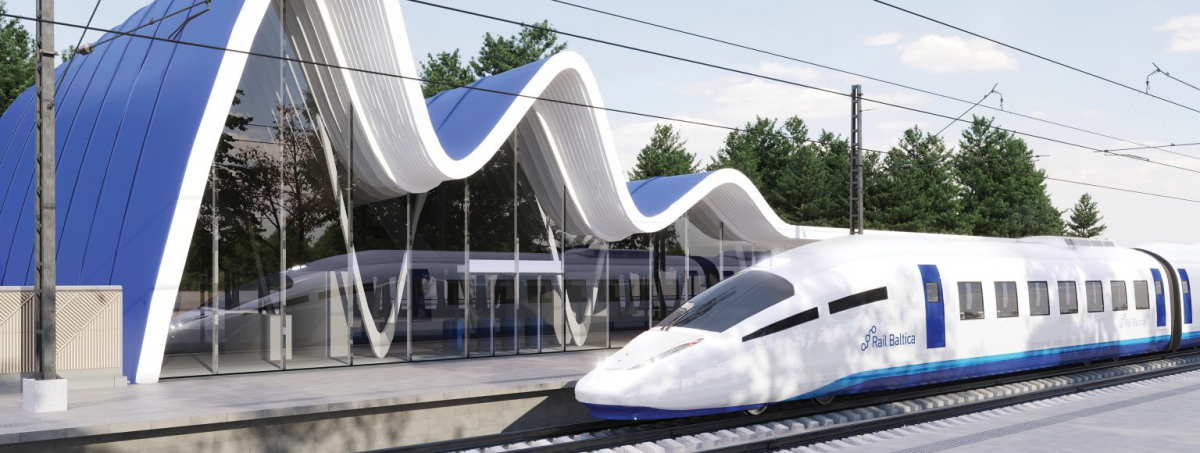
Rail Baltica is seeking €357.5 million in additional European Union funding to advance construction of its cross-border railway, with investment in bridges, electrical systems and signalling creating opportunities to strengthen safety across one of Europe’s largest infrastructure projects. The proposed funding would support work in Estonia, Latvia and Lithuania between 2027 and 2030, helping prepare the network for future passenger and freight operations.
Coordinated by RB Rail AS and the national delivery organisations, the application seeks €200 million from the Connecting Europe Facility’s General envelope and €157.5 million from its Cohesion envelope. As Global Construction Review reports, the funding would support civil engineering, energy and signalling systems, land acquisition and technical development across the three countries. The application remains subject to European Commission assessment, with a decision expected in spring 2027.
The construction programme has a significant Health & Safety dimension. In Estonia, proposed investment includes bridges, viaducts and wildlife crossings along the Tootsi–Timmermanni section, as well as the Pärnu railway bridge. Latvia’s programme includes earthworks, bridges and road overpasses as construction progresses towards the Lithuanian border. These complex works require coordinated site management, safe working-at-height procedures, traffic controls and careful management of interfaces between construction teams and existing infrastructure.
Electrical and railway systems are equally important to safe operations. In Lithuania, the funding would help develop high-voltage connections to traction substations, while the wider application covers control, command and signalling systems, electrification and power supply. These systems are fundamental to managing train movements, maintaining reliable power and supporting safe railway operations. The European Climate, Infrastructure and Environment Executive Agency identifies Rail Baltica as a fully electrified European-standard railway designed to connect the Baltic states with Poland and the wider European network.
For construction and engineering suppliers, the proposed investment creates potential opportunities across civil works, electrical infrastructure, signalling, technical design and specialist installation. Rail Baltica has already secured approximately €4.5 billion in EU funding through 12 CEF grant agreements, supporting design, preparatory works and construction. The new application would provide another funding route for advancing the programme, although the requested amount should not be treated as approved expenditure or awarded contracts.
The project also has wider significance for European transport resilience. By connecting Estonia, Latvia and Lithuania to the European standard-gauge network, Rail Baltica is intended to improve passenger and freight movement while strengthening cross-border infrastructure and military mobility. Delivering that ambition requires construction quality, effective safety management and reliable technical systems to remain central throughout the programme.
For the sector, the lesson is direct: investment in major rail infrastructure creates opportunities to build safety into every stage of delivery, from civil engineering and electrical installation to signalling and future operations. Rail Baltica’s funding application offers another potential step towards a more connected European transport network, supported by the specialist expertise needed to deliver complex infrastructure safely.
Source: Global Construction Review / Rail Baltica / European Climate, Infrastructure and Environment Executive Agency











.png)
