

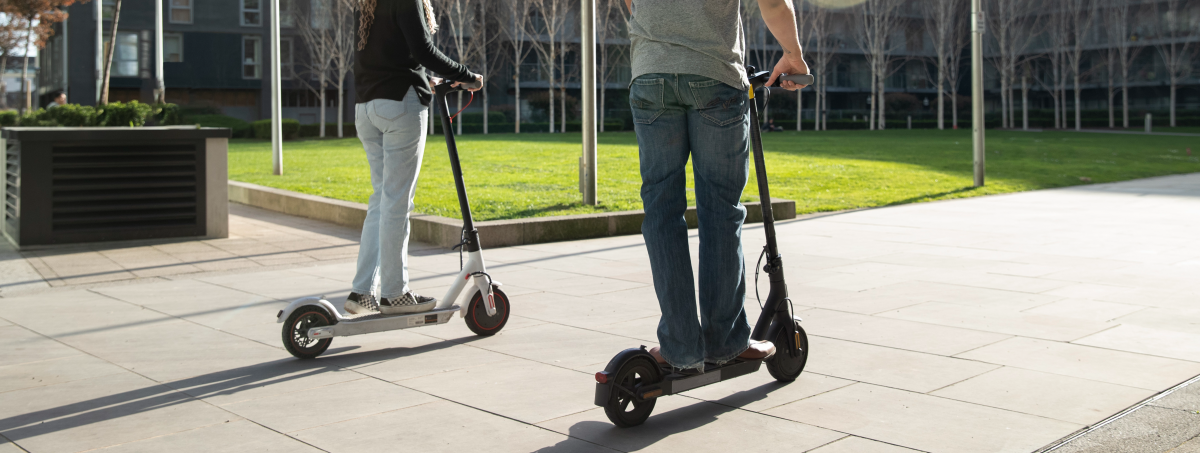
Corporate responsibility in product safety rarely makes health and safety headlines, but Decathlon's decision to withdraw all e-scooters from sale across its Irish stores deserves the attention of every employer and occupational health and safety professional in the country. The retailer's statement, published on 28 July 2026, is unambiguous: customer safety is the priority, and the decision reflects a commitment to responsible retailing and compliance with Irish legislation. It is a proactive, values-led safety decision taken ahead of any regulatory requirement to do so, and it signals a broader shift in how product liability, commuting risk, and corporate duty of care are converging in the Irish safety landscape. For employers whose workforce includes staff who commute by e-scooter, the decision is not just a retail story. It is a prompt to ensure that workplace wellbeing policies are keeping pace with the real-world risk profile of how employees travel to and from work.
The safety context behind Decathlon's decision is both well-documented and constructive in what it points toward. Irish hospitals have reported increasing numbers of e-scooter-related injuries including broken bones, head injuries, and facial trauma, while medical professionals have consistently identified helmet use as the single most effective preventive measure for reducing serious injury severity. The Road Safety Authority has published clear guidance on e-scooter regulations in Ireland, confirming that electric scooters are subject to road traffic law and must comply with specific technical standards on speed limits and construction. Gardaí have reinforced that regulatory message through repeated public enforcement communications. Decathlon's withdrawal decision consolidates that safety messaging into a commercial statement that will reach consumers far more effectively than any regulatory notice, demonstrating that proactive safety culture within the retail sector can complement regulatory enforcement in changing public behaviour.
The employer dimension of e-scooter safety has received less attention than it deserves. Under the Safety, Health and Welfare at Work Act 2005, employers carry a broad duty of care that extends to the general safety and health of their workforce, and while commuting falls outside the direct scope of workplace safety law, the Health and Safety Authority Ireland has consistently identified work-related road safety as an area where employer influence significantly affects outcomes. Organisations that actively promote safe commuting choices, including guidance on e-scooter helmet use, legal compliance, and responsible riding, are extending their safety management systems into the commuting environment in a way that reduces employee injury risk and demonstrates the kind of safety leadership that builds genuine workplace wellbeing culture.
Three actions allow Irish employers and health and safety professionals to build positively on Decathlon's decision. First, organisations that offer sustainable commuting incentives, including cycle-to-work scheme equivalents or green transport allowances that cover e-scooters, should review those policies to ensure they include a mandatory safety equipment requirement, specifically helmet use, as a condition of support, aligning occupational health and safety standards with the personal safety guidance the RSA and medical professionals have consistently recommended. Second, workplace wellbeing communications teams should use Decathlon's decision as a timely and relatable hook for a broader safe commuting awareness campaign, covering e-scooter regulations, helmet standards under Irish road traffic law, and the reporting pathway for commuting injuries that affect fitness for work, ensuring that employees have the information they need to make safe daily travel decisions. Third, health and safety leaders should engage with the Road Safety Authority's employer road safety resources to develop a structured active travel safety policy that addresses the full range of micro-mobility options employees are using to commute, from bicycles and e-bikes to e-scooters and personal electric vehicles, building a proactive safety framework that anticipates how the commuting landscape will continue to evolve.
Decathlon's decision to prioritise customer safety over product revenue is the kind of safety leadership the broader commercial and employer community can learn from. Proactive safety culture does not wait for a regulatory mandate or a serious incident to act. It identifies the risk, applies the standard, and communicates the decision clearly. That is precisely the model that Irish health and safety professionals have been building across workplaces for two decades, and it is equally applicable to the commuting journeys that bring employees safely to and from those workplaces every day.












.png)
