

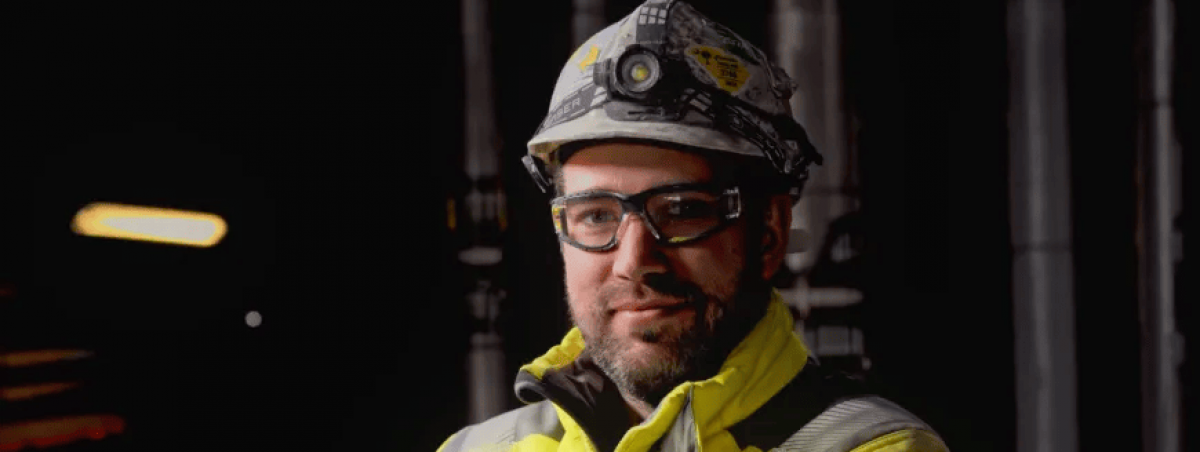
Leonard’s latest investment in robotics is highlighting how automation can help reduce worker exposure to some of the most hazardous environments encountered during industrial maintenance and shutdown operations.
The Cookstown, Northern Ireland-based industrial operations specialist has rebranded from G. Leonard to Leonard, alongside plans for significant investment in a new Northern Ireland headquarters and manufacturing facility over the next five years.
The rebrand coincides with the development of Leonard’s Descender robotic demolition and installation arms, which are intended to reduce the need for workers to enter high-risk shutdown environments in cement, waste-to-energy and other heavy industries. The new range is due to be officially revealed in the coming weeks.
Leonard’s existing robotic demolition systems are already designed to reduce operator exposure in confined and difficult-to-access environments. The company says remote-controlled equipment can reduce the need for manual demolition platforms while improving productivity during demanding industrial work.
The safety challenge is particularly relevant to cement and other heavy industries, where high-temperature kilns, pre-heater towers and refractory-lined structures can present multiple hazards during shutdown periods. Traditional refractory removal can require teams to enter structures that may be unstable, confined or still cooling.
From a health and safety perspective, remote and robotic equipment provides an opportunity to reduce direct human exposure to the hazard rather than relying solely on additional controls around a high-risk task. Leonard's robotic arm technology has previously been used to remove workers from hazardous areas during industrial shutdown activities.
The approach is consistent with a wider shift towards robotics being used to reduce human exposure to extreme working environments. UKRI's Robots for a Safer World programme specifically focused on developing advanced robotics and autonomous systems capable of taking people out of environments that are difficult or dangerous for humans to access.
Leonard is also working with Ulster University and Innovate UK Business Connect to develop semi-autonomous capabilities and increase data capture across its product suite. Ulster University's Cognitive Robotics research covers areas including machine learning, robot vision, control systems, motion planning and human-robot collaboration.
The company's strategy extends beyond cement, with waste-to-energy and other heavy industrial environments identified as areas where refractory-lined, high-temperature and confined-space assets create similar safety challenges.
The planned investment in a new Northern Ireland headquarters and manufacturing facility could further support research and development as Leonard expands its operational presence internationally. This creates scope for specialist safety technology to become increasingly integrated into industrial maintenance strategies.
The development also demonstrates how productivity and safety objectives can work together. Leonard says its refractory and demolition solutions can shorten shutdown activities while reducing the number of people required to work directly within hazardous areas.
For health and safety professionals, the development is relevant as industrial operators consider how automation can complement established risk controls. Robotics does not remove the need for competent personnel, planning or safe systems of work, but it can change how workers interact with hazardous environments.
For the sector, the lesson is clear: industrial automation can support a preventative approach to workplace safety by reducing human exposure to high-risk tasks. As robotics becomes more capable, its role in confined-space work, high-temperature maintenance and industrial shutdowns could become increasingly important to safer operations.
Source: Agg-Net / Leonard / Ulster University / UKRI








.png)
