

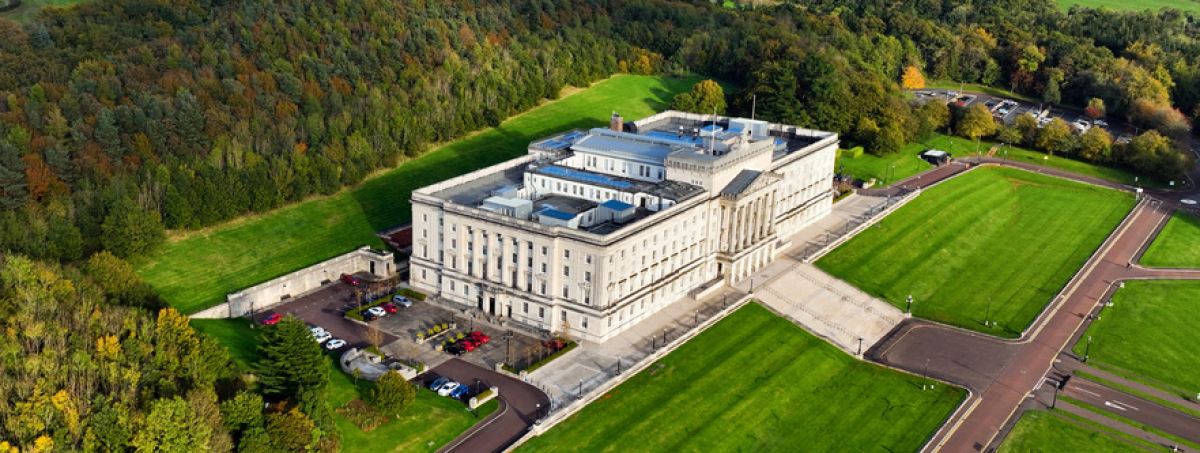
Long-running roof remediation works at Northern Ireland’s Parliament Buildings are moving into a second phase as efforts continue to address structural concerns, manage water ingress and protect the long-term safety and integrity of the historic site.
Scaffolding has remained in place across sections of the Stormont Estate since 2024 following persistent roof leaks affecting the Grade A-listed building, which was constructed between 1928 and 1932.
Assembly Commission representatives confirmed that the remediation programme has been divided into two phases to prioritise immediate risks while establishing a longer-term strategy for the remaining works.
Phase one, which is nearing completion, has focused on priority health and safety interventions including repairs to the rear parapet and internal courtyards. Works are currently under way and are expected to conclude by the end of August 2026.
Phase two will expand the programme to address broader water ingress concerns affecting other sections of the roof. Planned activity includes further investigations, option development and appointment of an integrated consultancy team to define the full scope of remediation.
Early assessments have identified additional technical challenges including localised stone deterioration and issues within courtyard eight, with interim measures expected where necessary to reduce emerging risks.
The project highlights the importance of proactive maintenance and structured asset management for ageing public buildings, particularly where deterioration may create operational disruption or increase safety exposure for occupants and visitors.
Large-scale remediation programmes continue to play an important role in supporting workplace safety, maintaining building performance and extending the lifespan of critical public infrastructure.
Read more about Stormont’s roof remediation programme and building safety measures in the original report.











.png)
